
Colorado’s Wolf Reintroduction Hasn’t Gone to Plan. Are These Cowboys Its Last Hope?
It was midnight when Jesse Lasater and Max Morton heard the wolf howling behind them. It was a lonely sound, deep and mournful, and it carried through the pines. The men whirled, and Morton touched his shotgun. For a moment, they stood ther…
It was midnight when Jesse Lasater and Max Morton heard the wolf howling behind them. It was a lonely sound, deep and mournful, and it carried through the pines. The men whirled, and Morton touched his shotgun. For a moment, they stood there in the heavy silence, listening. This wolf was one of at least two that had been slowly closing in on a local rancher’s herd of cattle over the past few days. Now, only 100 yards separated predator from prey.
The wolf sounded off again, and the men took off—not away from the wolf, but toward it. The chase was on.
The two riders were on foot, fighting through thick brush, letting the wolf’s keening guide the way. They were gaining on the animal, slowly closing the gap until it was just 80 yards away. Morton lifted the shotgun.
The gun was loaded with cracker shells, non-lethal rounds designed to scare wolves with a bang and flash of light. As wildlife damage-mitigation specialists for the Colorado Department of Agriculture (CDA) and Colorado Parks and Wildlife (CPW), respectively, Lasater and Morton had both been trained on the gun, as well as on pepperball launchers—basically paintball guns loaded with capsaicin rounds. All tools in a range rider’s arsenal.
Morton aimed, fired a shell, and the ink-blue sky exploded with light. The howling cut out, and the range fell silent.
“The wolves go real quiet after that,” Lasater, 45, says. “They’ve been scolded. From then on, it’s just track and sign.”
Lasater and Morton took off again, following an almost imperceptible trail of footprints, broken twigs, and scuffed soil across the range. They caught up to the wolf and sent it running again. The pursuit continued until around 2 A.M. By the time the sun came up, the wolves were gone, and the herd was safe—for now.
Reintroduction Gone Awry
Right now, it’s hard to talk about wolves in western Colorado without pissing off someone. In 2020, Coloradans voted on a now-infamous ballot measure called Proposition 114, which proposed to reintroduce the predators to the state’s largely rural Western Slope. The tricky bit is that most of Colorado’s voters live out east, along the largely urban Front Range that encompasses Denver, Fort Collins, and Colorado Springs. Urban liberals loved the idea of wolves in the distant wilderness. Ranchers liked it a whole lot less.
The measure passed with just 50.9 percent of Coloradans in favor. That left local land managers with an almost impossible task: impose the will of the white-collar East on the state’s ranching West.
Western livestock producers were outraged.
“People feel done to,” says Ray Aberle, deputy assistant director of Colorado Parks and Recreation’s Lands Unit, who works closely with the state’s woolgrowers and cattle producers. “They feel like they weren’t heard with Prop 114. That tension was there. It’s still there.”
In 2023, CPW released ten wolves on the Western Slope. In 2025, they released 15 more. It only took the new wolves five months to get the hang of killing cattle.
“It was worrisome,” said Travis Brooks, general manager for The High Lonesome Ranch, a beef operation near Grand Junction. “We were dealing with predators on the landscape on a regular basis already.”
Ranchers felt they had enough on their hands trying to prevent bears, mountain lions, and even elk from taking out cattle. Given that a single cow is worth thousands of dollars, even a little extra depredation can be a huge blow to a rancher’s bottom line. And the situation in Colorado is a far cry from “a little.” Last year alone, Colorado’s four wolf packs killed or injured 37 cattle. The state, which had agreed to compensate farmers for wolf-related losses, shelled out a cool $1 million—more than three times what it had budgeted.
“People feel done to. They feel like they weren’t heard with Prop 114. That tension was there. It’s still there.”
I’d been living in Boulder, Colorado, for four years when Prop 114 appeared on the ballot. At the time, I heard people in my circles citing the ecological benefits of having apex predators on the landscape—things like keeping elk populations in check, weeding sick deer out of herds, and providing carrion for scavengers like eagles. Boulderites seemed to know much less about the damage wolves can do to livestock.
Standing on its hind legs, an adult gray wolf is as tall as a man and can weigh as much as one—up to 140 pounds of fast, lean muscle. Their paws are as broad as saucers. And unlike mountain lions or even bears, they kill slowly—shredding an animal until it falls dead on its feet.
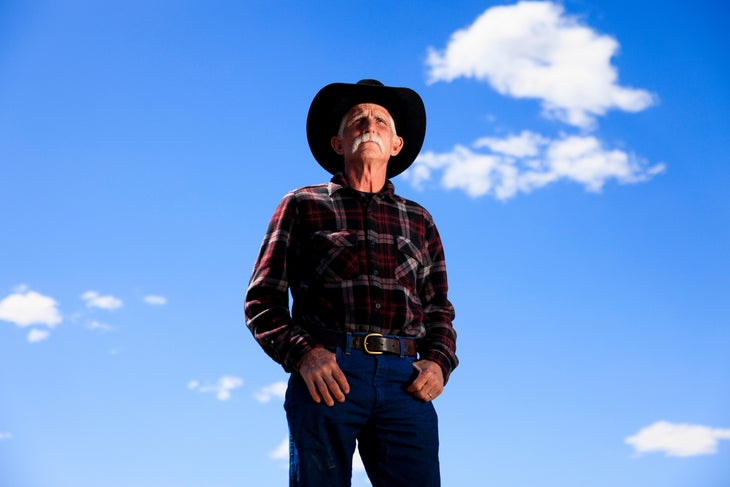
“They’ll tear a cow apart,” said James Bradley “JBrad” Miller, a lifelong cowboy who’s been tracking wolves and other predators for more than 40 years. “They bite and they bite, and it takes a whole lot of bites to kill a cow. It’s bloody. It’s nasty. It’s just the animal’s way, but it’s viewed as cruel.”
On top of that, to a rancher, it feels personal.
“It’s like something coming in and killing your dog,” says JBrad. “And when that happens, the rancher has a big heartburn over it just the way you would or any of us would.”
With 30 wolves now on the landscape and populations rising, depredations are expected to increase. So are the impacts to ranchers, many of whom have already been struggling with livestock losses due to extreme drought.
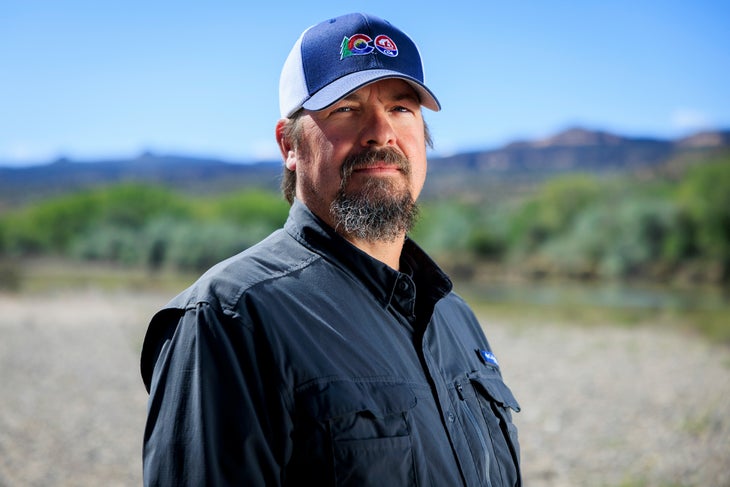
“We’re in a really volatile market right now,” says Brooks. “Having introduced predators on the landscape…it doesn’t help.” His voice is tight with weariness. He seems tired of talking about this, of dealing with it. Brooks is treading a finer line than most, too: He lives and works among the 49.1 percent who vehemently opposed Prop 114—but he sells to the 50.9 percent. There’s little he can do or say without one side or the other taking it as a betrayal.
So, Brooks speaks slowly, choosing each word. He knows wolves are here to stay, and he’s decided to put his own thoughts aside. When asked how his employees feel about wolves, he thinks for a long moment.
“There’s obviously a variance in opinion,” he says at last. That’s about all he’ll say.
Still, the reason I’m standing on his ranch, amid the rolling high desert of Mesa County, is because he’s opened his land up to the CPW and the CDA to kick-start the latest attempt at wolf mitigation: range riders.
Watchers at the Rim
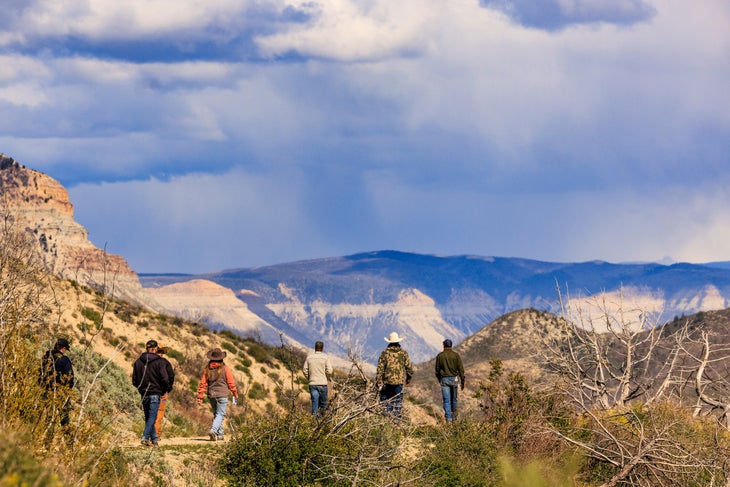
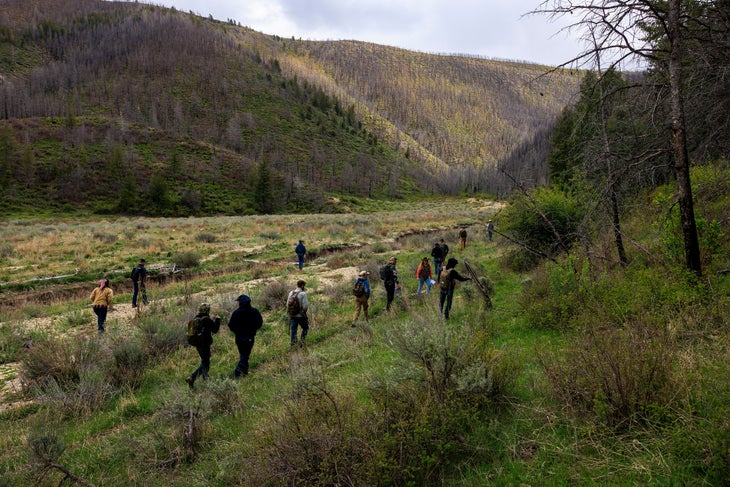
Range riders are sentinels on horseback. Their job: ride the range when no one else will, in the dark and in the rain and in the blistering heat, tracking wolves and running them down. That’s what this group of 14 riders is here to learn how to do. And what I’m here to learn—if I can keep up.
“Range riding is basically the same as cowboying,” says JBrad, standing in a field of sagebrush bleached milk-pale by the cloudless sky. The brim of his hat shades everything except the white bracket of his handlebar mustache. I asked him how long he’s been range riding. The answer: as long as he can remember.
JBrad, now in his sixties, grew up working on ranches. His dad had one, until a horse fell on him and the injury forced him out of the business. JBrad followed the work elsewhere, across Arizona and beyond. In his mind, the jobs he did back in the day aren’t so different from the work he does now. “You watch a cowboy and realize they’re looking for all the same things a range rider is, it’s just that they’re a little more focused on the cattle.”
He’s not wrong. The job is simple: Watch the cows; sleep beside the herd; form a moving, human fence, and make sure nothing gets through.
Range riding is not new tech. It’s also not necessarily the most effective tech. According to CPW staff, some landscapes do better with tools like flashing lights, alarms, or fladry, a type of fencing equipped with red fabric strips that startle predators. But for land managers, wolf reintroduction never truly had a tech problem—it had a people problem. And that’s something the range rider program is uniquely poised to solve.
CPW and CDA piloted their range rider program in 2025 with help from the Western Landowners Alliance, a producer-led conservation group. They brought on eight riders for a full season of work in that inaugural year.
Contrary to popular belief, the range rider program isn’t funded by tax dollars. Instead, the cash comes from a license plate program the State of Colorado launched in 2024. Drivers pay a little extra for a wolf-themed plate, and the money goes to a CPW fund earmarked for wolf conflict mitigation. To date, the plates have netted more than $1 million.
When the range rider program was announced in 2025, not all ranchers were excited about the idea, according to Dustin Shiflett, a longtime rancher and CDA’s nonlethal conflict reduction program manager.
“Producers don’t always want a bunch of people on their land,” he says. Yes, the program is free for ranchers to utilize. Yes, it saves them from having to pay their own ranch hands or work all-nighters themselves. But most ranchers aren’t too fond of CPW or CDA interference, and they would rather have their own guys on the job than let a stranger from the government roam around their property.
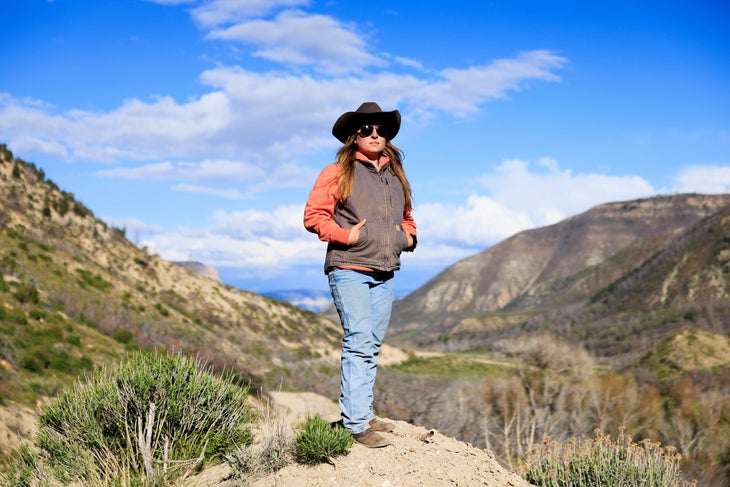
Despite the reticence, most of the producers who took on range riders last year requested they come back. And most new producers have been open-minded about the process, says Emma Baker, 26, one of this year’s returning riders.
“They’ve been really welcoming and understanding,” she says. “They were all willing to take a chance on me.” For Baker, a kid from a Kentucky horse farm with degrees in conservation biology and Spanish, the gig was a dream.
“I can hardly believe I get paid to do this,” she says.
The money isn’t bad, either. First-time riders can make up to $300 per day for up to 10 hours of work. Returning riders can make $360 for up to 12. That comes out to $30 an hour for riding, being outside, and monitoring the landscape. That said, long days (and nights) are the norm, and riders are dedicated enough to their jobs that they don’t necessarily turn tail when the clock stops.
“I work a lot of unpaid hours,” Baker says. “I know a lot of us will go beyond those 10 to 12 hours because the livestock are important to us.”
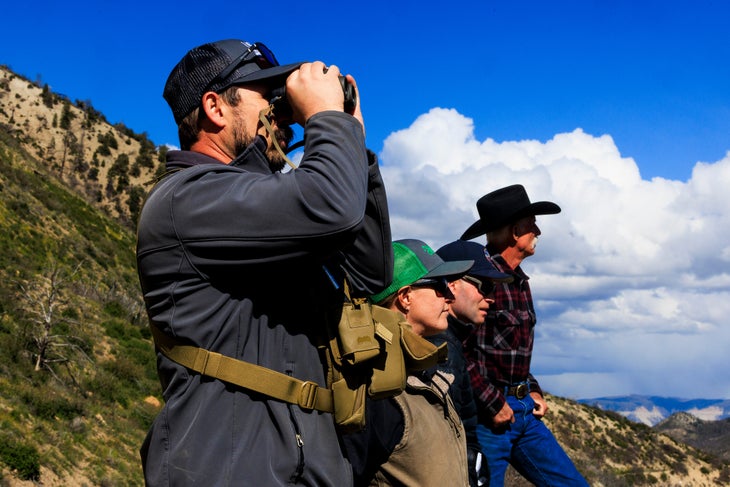
In return, Baker has done her best to prove her worth. She rides four to six nights per week. During night shifts, she’s often up until dawn, relying on energy drinks to keep her going. Sometimes she’s sitting on her ATV or in her truck, watching the cows. Other times, she’s hiking constantly, trying to keep between the cows and the wolves, scanning the landscape with thermal binoculars to spot the first sign of a predator.
“You watch a cowboy and realize they’re looking for all the same things a range rider is, it’s just that they’re a little more focused on the cattle.”
But is it working?
It’s hard to say because it’s impossible to measure, says Rae Nickerson, CPW’s wolf damage and conflict minimization manager. After all, it’s not like she can ask a rancher to stop watching his cows to act as a control. So, from a scientific standpoint, no one is sure. But socially, things are shifting in a big way.
“The range riders believe they’re preventing conflict [between livestock and wolves]. And the producers believe it, too,” Nickerson says. Accepting range riders—oft viewed as agents of the enemy—is a huge step in the right direction. And the more riders they have on the landscape, the more depredations CPW and CDA can prevent. That could save the lives of both cattle and wolves.
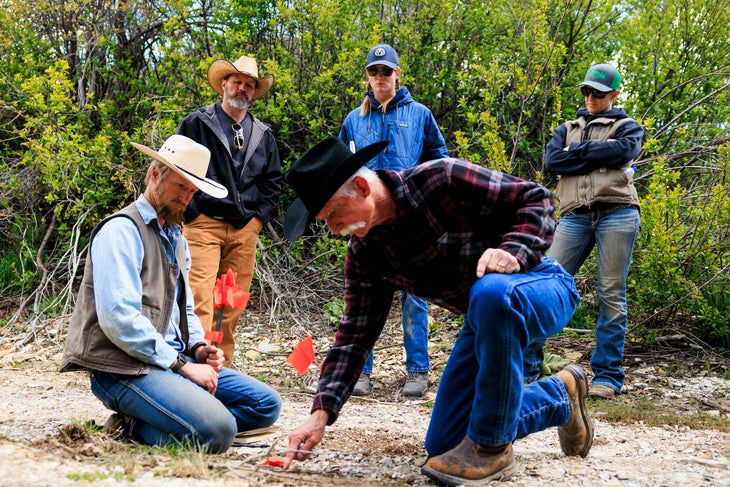
So, in 2026, CPW and CDA relaunched the program in earnest, hiring 15 riders and offering them each a five-year contract.
To get the gig, riders had to have their own equipment: a horse, a truck, and/or an ATV. They also needed to have both extensive riding experience and extensive ranching experience. But all that meant nothing without the right personality.
“We can teach the range riders certain skills,” says Shiflett. “But the one thing we can’t teach is how to be open-minded enough to take some pressure from someone in a heated moment and pivot that conversation to a solution.”
After all, the riders aren’t just ranch hands. They’re liaisons between the 50.9 percent and the 49.1 percent. They’re diplomats.
Range Diplomacy
The diplomats in question stood behind me in a tight knot by a row of pickup trucks. There were 14 contracted CPW and CDA riders present—this year’s entire cohort minus one, who had called out this morning because her cows started calving. A few nonprofit and agency riders, like Lasater, who had also been invited to the training, chatted nearby. Most were wearing cowboy hats and jeans. They scuffed their boots in the dirt. Palm-size belt buckles glinted in the sun. Lasater adjusted his sunglasses. A bowlegged man with a Stetson smoothed dust out of his mustache.
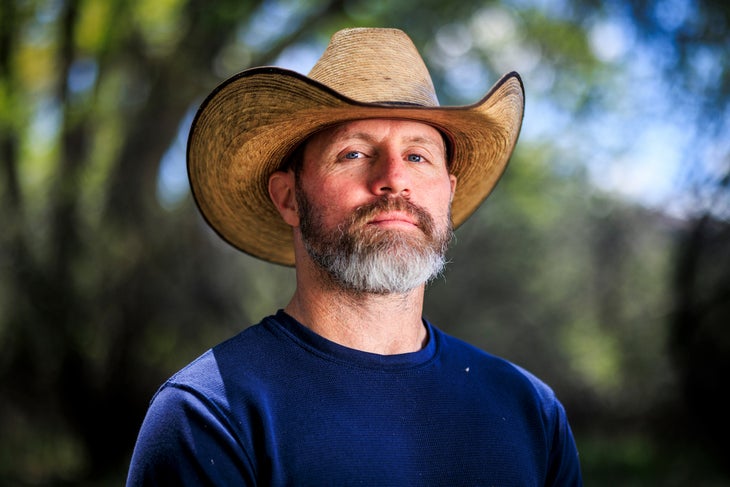
I turned back to Brooks. I asked him why, if wolves are such a thorn in his side, he’s letting the biologists responsible for them use his land. He shrugged.
“We really want to focus on solutions here,” he said. “We might be stepping out of our comfort zone a little bit, but I’d rather be part of the solution than sitting in the background complaining.”
That’s the attitude of all the producers I talk to. The reluctance is palpable. You can see the pain on their faces, even as they fight to string together polished, tactful sentences. They’re living a nightmare, and they’re trying to problem-solve while half of their brain is trying to catch up, still not convinced that all this is real.
JBrad is one of the few here who’s seen all this before. He was working as a ranch hand in Arizona when Mexican wolves were reintroduced back in the 1990s.
“It was hard, being a rancher when they started to bring the wolves back,” said JBrad. “At first I was against it. My grandfathers worked so hard to get rid of them because they were eating everything. I figured my grandfather would be rolling in his grave.”
I asked JBrad if things in Arizona have improved much over the last 30 years. He shook his head. These days, the state has more strategies, including a range rider program of its own. But the wolf population is growing as fast as ranchers can adopt the new tools, which means the level of tension over wolves in Arizona has largely remained steady, JBrad says.
Right now, there are nearly 300 wolves spread across Arizona and New Mexico. In total, they’re killing around 100 cattle per year.
That’s a small percentage of total herd size; the two states together have more than 2 million head. And bears and lions still kill far more cattle than wolves do. But this feels different, says Nickerson.
Unlike with many other predators, when the problem is wolves, you can’t take matters into your own hands. You can’t kill the thing and be done with it. At least, not legally. You can only use mitigation tools—and those are controversial in cattle country.
“With wolves, there’s pressure from your community to not use [mitigation] tools because they could push the wolves onto your neighbors’ land. There’s pressure from agencies to go to meetings and sign permits. When a wolf gets spotted on your property, your whole life changes, and the whole time, you’re lying in bed thinking, ‘God, are they out there killing right now?’”
“At first I was against it. My grandfathers worked so hard to get rid of them because they were eating everything. I figured my grandfather would be rolling in his grave.”
A handful of the range riders surrounding me are producers themselves. They work their own herds during the week and guard others’ on their hours off. The wolves are constantly on the move, which means they’re not always camped out on one person’s property. If a range rider has a wolf problem on her own land, she’ll likely stay there to guard her own herd and call in reinforcements as needed. If it’s a neighbor who has the issue, she’ll go to their aid.
Working as a range rider means you get paid to help neighbors in need—which makes it a little more affordable to steal time away from your own ranch to ride for a colleague. The producers who range ride say they do it because it’s community work. It’s about contributing to something bigger.
In other words, these folks aren’t here because they have time on their hands, or because they love wolves. Instead, they’ve shown up for the same reasons Brooks has: they’ve accepted the new reality, and they’re looking for a solution.
Detective Work
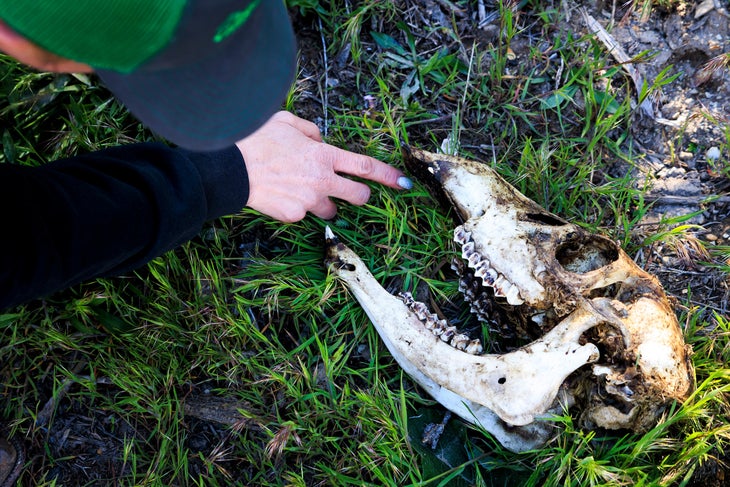
A gray skull with clean white teeth lay alongside the trail. Just beyond it, there was a hollowed-out place in the bushes, a massive nest lined with hair. A clump of something dark and filled with grass sat in the scrub nearby. Aside from the skull, we saw no bones.
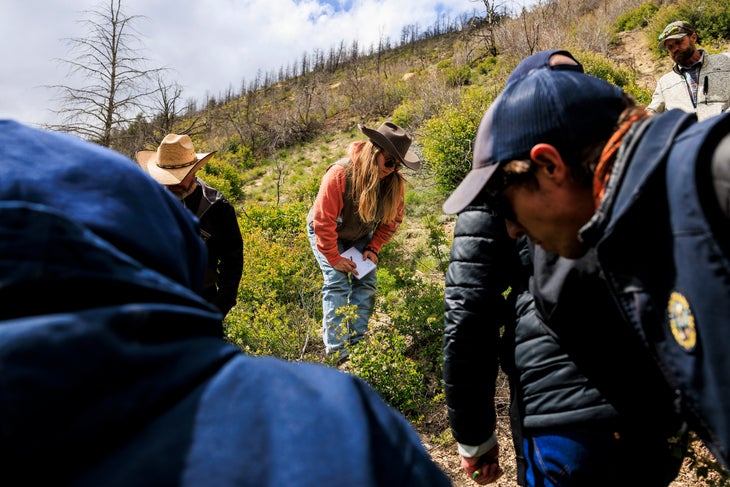
The range riders gathered around, kneeling in the duff, turning over the skull to look at its seams. There was a hole in the jawbone, and a chip just beside the throat. A mystery lying out in the dust.
The riders murmured in the flickering shade of the trees while Phil Johnston looked on.
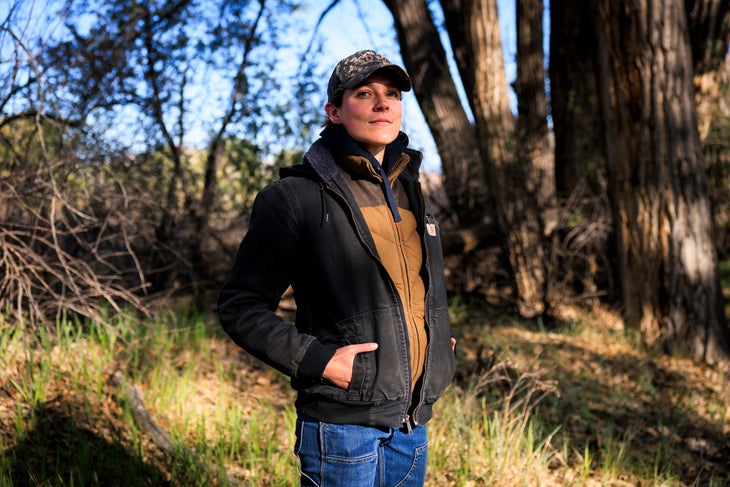
Johnston is a professional lion tracker and a houndsman. He’s also a predator biologist for California Parks and Wildlife. But today, he was working as an instructor with Cybertracker, an international wildlife tracking education organization, and he was here to teach the range riders how to track a wolf through miles of open country.
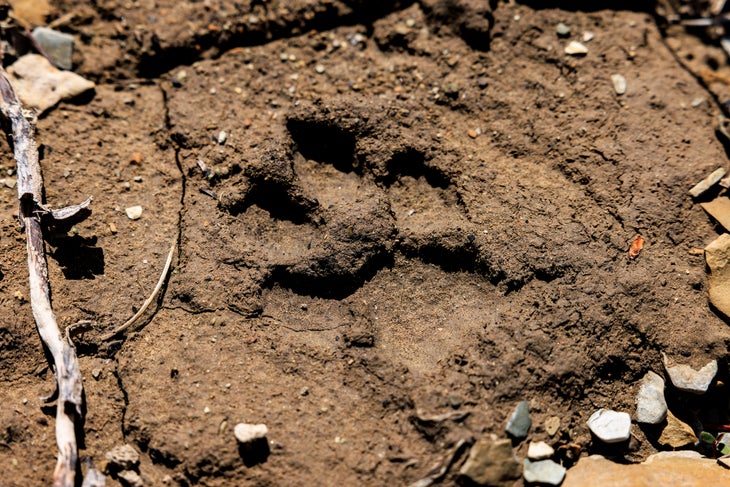
“The landscape tells a story,” he says. And the riders need to have every word of that language—typically referred to as track and sign—memorized. After all, knowing the difference between a turkey track and a turkey vulture track can make a huge difference when you’ve got a missing cow and you’re trying to find a carcass.
“The skill,” Johnston says, “is to be able to walk across a landscape and be able to tell your producer what predators they need to worry about—and what they don’t.” It’s a skill that’s been dying out these last 100 years, but it’s one Johnston (and the state of Colorado) will need to revive if they want accurate data on wolves’ whereabouts.
Wolves aren’t easy to find. Not all of them are equipped with radio collars, and the location data that comes in from the collars is aggregated and at least half a day late by the time it reaches CPW staff. Because wolves can travel more than 20 miles per day, that’s not quite enough to go on. And even if CPW did have better data, it would remain classified; this is an endangered species, after all. Not even range riders get to know exactly where the wolves are at any given time. Hence the track-and-sign training.
Once all the riders have shared their guesses about the crime at hand, Phil reveals the truth: the teeth and the seams of the skull show it to be a yearling elk. The fur-lined den is a mountain lion cache. The grassy lump? The rumen, a foul-smelling storage chamber for half-digested food in the elk’s digestive tract. Lions pull it out and discard it before hauling their kill to their den. Typically, they eat the whole carcass, bones and all. In this case, the lion left only the skull—with the characteristic chip in the jaw that comes from a lion snapping its teeth around an animal’s jugular. Mystery solved.
Unlike with many other predators, when the problem is wolves, you can’t take matters into your own hands. You can’t kill the thing and be done with it. At least, not legally.
Some of the riders are taking notes, but it seems most have guessed right. This, after all, is what they’re used to: finding a dead cow and tracking down the killer so they know what to watch out for next time. This work has always been important to ranchers, but now, the stakes are much higher on getting it right. If you can prove a lion or bear kill, you can get up to $5,000 in compensation from the state. Prove a wolf kill, and you can get up to $15,000 per head of cattle.
The proof, however, hasn’t always been easy.
“I can’t tell you how many biologists I’ve seen call lion tracks wolf tracks,” says Nickerson. “And producers with decades of experience on the land will do the same.” When tempers are hot, people see what they want to see. That doesn’t exactly help smooth over relations.
That’s where the track-and-sign clinic comes in. Here, range riders learn alongside agency people, depredation specialists, and producers alike. It’s a collaborative space. It’s also playful. People squat over marks in the dust, roll hairs between their fingers to determine whether they belong to a cow or bear. The riders snicker together as Johnston practices loping on all fours to demonstrate a coyote’s gait. It’s serious stuff—but it’s also fun.
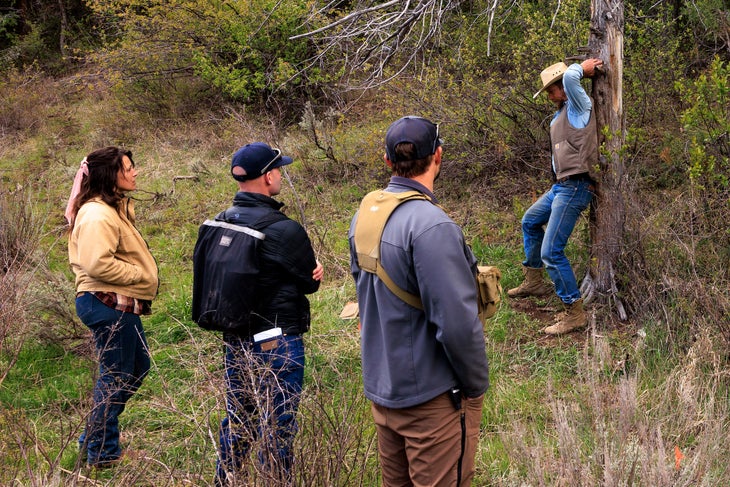
After the training, both producers and agency personnel leave with a new sense of understanding and a shared vocabulary. That should make it easier to converge upon the truth at future depredation investigations. It also cultivates a sense of mutual respect.
“Previously, you had two people who didn’t trust each other and didn’t believe each other,” Nickerson says. “Now you’ve got two people who both know what a wolf track is because they learned it together.”
People out here aren’t new to collaboration, says range rider Christina Vander Berg: it’s what the whole West was founded on.
Vander Berg, 41, would know. After a lifetime working around cattle and gigging as a rodeo judge, she started her own herd in 2020. Business is hard, she admits, and ranching is a 365-day-per-year job. It’s difficult to hire help unless you’re making insane profits. Which means, most of the time, you’re doing it all yourself—or relying on your neighbors when you wake up to more than you can handle.
Earlier this year, Vander Berg was underwater, keeping up with the ranch in the middle of a personal medical crisis, when one of her cows started giving birth to a calf that weighed almost as much as she did. So, she called in some favors—and people came out of the woodwork.
“I spent years showing up to brandings, vaccinations, everything I could—and now they’re there when I need them,” she says. “In this community, you rely on your connections, and people are willing to chip in and help you grow the way their families did for them.”
Vender Berg now works as a contract range rider through Defenders of Wildlife, a national non-government organization that currently funds three riders in Colorado. The program is independent of the CPW-CDA program, though they occasionally work together. For her, it’s just another way to give back to her community. That, she says, is what Western culture is all about.
“It’s doing the right thing when no one’s looking. It’s being neighborly,” Vander Berg said. “If you see a broken fence, you fix it. It doesn’t matter whose fence—whoever it is, you know they’ll have your back later.”
Another Crime Scene
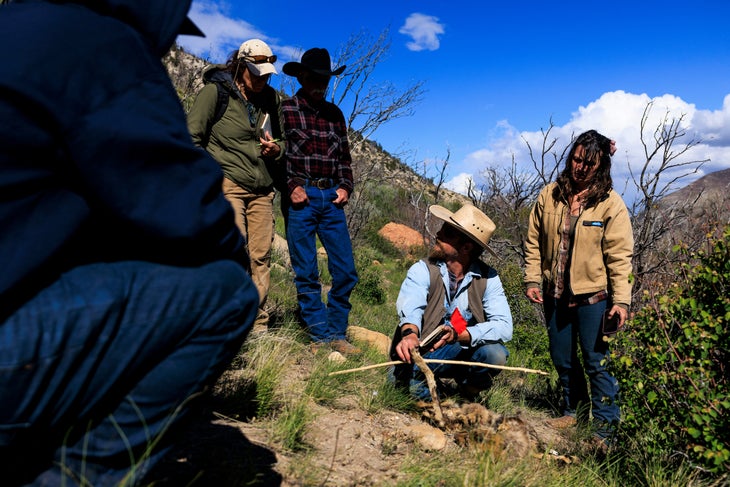
A disemboweled coyote lay in the dust. Nearby, a thin, chalky line crossed the talus, straight as the interstate and white as bone. Beside it, there was a piece of something twisted like wire, laid out flat and covered in hair. Plucked hair everywhere. A stale, meaty stink.
The range riders knelt amid the sagebrush, evaluating the scene as before. They checked the dead thing’s teeth. They looked for bullet holes.
All the while, riders were chatting, swapping stories. About elk getting caught in their electric fence or range riding in Colorado or New Mexico. About bear hunts gone wrong and bear hunts gone right. About dogs with missing toes and getting stepped on by horses. About hammering elk teeth out of skulls and making jewelry out of rattlesnake vertebrae. About long rides and big country. About doing things the old-fashioned way.
That’s the magical thing about all of this. In a world obsessed with tech and progress and AI, this program is a vote for the opposite: tapping into ancient skills and reviving the cowboy rhythms that the people of this region once relied on for survival. And the proof that it works, however anecdotal, feels like a point in favor of the analog. A point in favor of the lifestyle that all these people around me have been dedicated to all along.
“Previously, you had two people who didn’t trust each other and didn’t believe each other. Now you’ve got two people who both know what a wolf track is because they learned it together.”
When I voted on Prop 114 in 2020, I didn’t realize just how little I knew about this world, this whole other planet that lay just across the Continental Divide. I’m not going to say how I voted. But if I’d done this training earlier, I’d probably have voted differently.
A woman crossed in front of me and I stopped her to ask what the white line in the talus was. She identified it as scat from an eagle taking off after scavenging the carcass. Other riders bickered about the age of the animal and its cause of death. I asked a few of them about the wire on the ground. They smiled at my innocence. It’s not wire, they said; it’s the coyote’s guts stretched out and shriveled in the dust.
I’ve got plenty left to learn.
Is It Working?
From a distance, training a group of ranch hands to ride down wolves looks something like a last-ditch effort. Which begs the question: Is the Colorado reintroduction effort failing?
Dead wolves make the news. So do dead cattle. But neither means failure, says CPW’s Aberle.
“Biologically, as markers of success, I’m looking at reproduction and recruitment,” he says. “At the drop of a hat we had reproduction in Colorado.” All the packs have had pups at this point. Recruitment—or keeping wolves on the landscape year after year—is another story.
Over the past few years, Colorado’s wolves have been hit by cars, killed by mountain lions, killed by other wolves, and even perished during transit to release sites. It may not look good, but none of it is abnormal, says Aberle.
“We’re not there yet,” Aberle says. But in terms of building a self-sustaining wolf population in Colorado, “we’re on our way.” Even without further intervention, wolf populations in Colorado will continue to grow. And with two confirmed depredations already this year and calves hitting the ground left and right, riders are gearing up for some late nights.
Near the end of the training, while the riders were getting their track-and-sign certificates and feedback from Johnston, JBrad and I sat on a sun-bleached log beside the pebbled shore of the Colorado River, watching the water go by.
When I asked him if things would get easier for the riders, he only sighed.
“They don’t realize how much work it’s going to be when the wolves get dense up here,” he said. “When they do, they’re going to be busy, and they’re going to be busy all the time.”
I asked him how he feels about wolves now, after all these years. Like everyone else I spoke to—Lasater, Baker, and Vander Berg included—JBrad told me his opinion doesn’t matter. Reality is what it is. All we can do now is find a way to move forward.
“I can see why people want them, and I can see why people don’t,” he says. “It’s just a tough situation. But there are a lot of things in the world that are this way, and this isn’t going to be the last.”
The post Colorado’s Wolf Reintroduction Hasn’t Gone to Plan. Are These Cowboys Its Last Hope? appeared first on Outside Online.
Source: Outside Online — Read original