
How Death Cab for Cutie’s Ben Gibbard Uses Creative Discipline to Fuel Long Runs
Ben Gibbard was 36 years old when he ran his first 30K. The lead singer and guitarist of Death Cab for Cutie had already been nominated for numerous Grammys, sold out countless shows, and firmly established himself as an icon of American in…
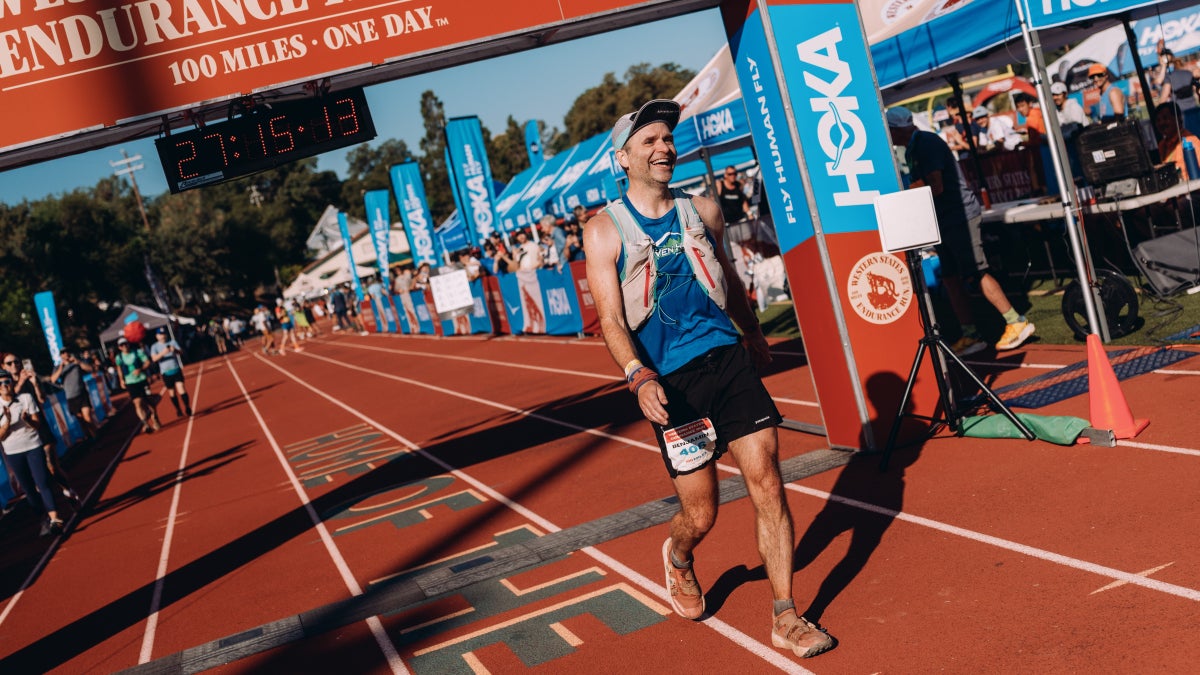
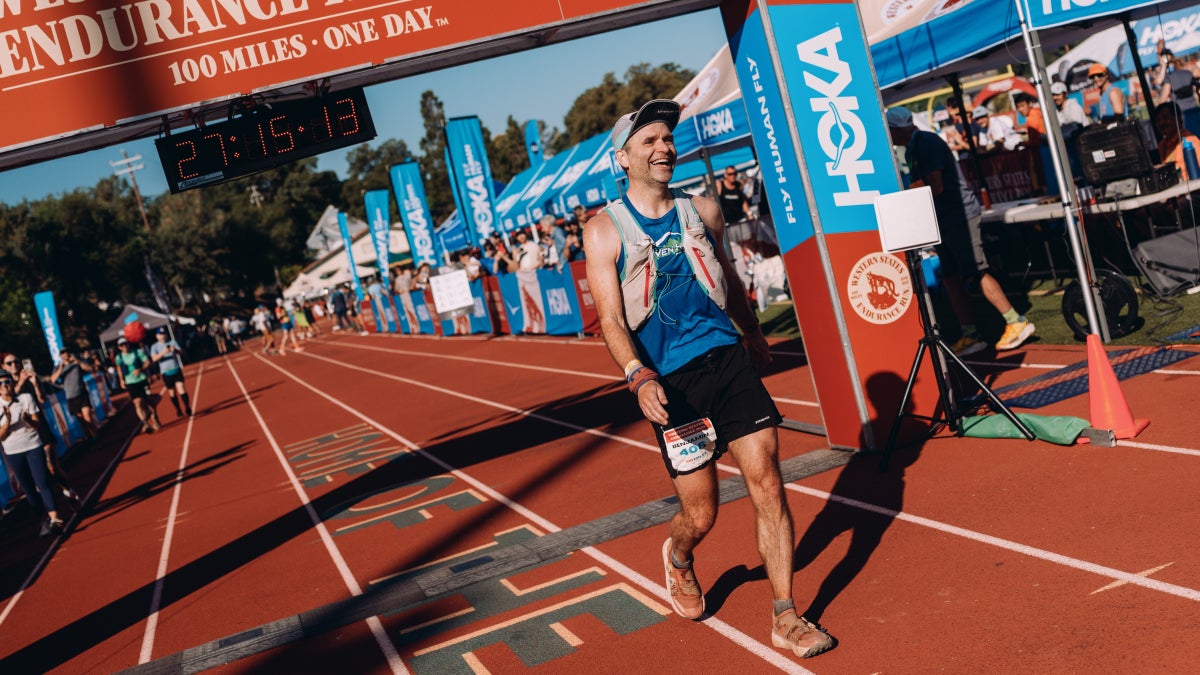
Ben Gibbard was 36 years old when he ran his first 30K. The lead singer and guitarist of Death Cab for Cutie had already been nominated for numerous Grammys, sold out countless shows, and firmly established himself as an icon of American indie music when he laced up his Brooks Adrenalines for the Golden Gate Trail Run 30K and discovered what was to become a new passion: ultrarunning.
These days, ultramarathons are a regular part of Gibbard’s life. Just last year, he competed in the Western States Endurance Run, the rugged 100.2-mile race that takes participants up and down California’s Sierra Nevada Mountains. And the musician has no plans of dialing back his racing or his music.
Death Cab for Cutie just announced their 11th studio album, I Built You a Tower, out June 5; their single “Riptides” is out now. The band kicks off its 2026 tour with a performance at Outside Days (our parent company’s festival) on May 29.
We caught up with Gibbard to talk about his training habits, his race goals, and—most importantly—whether or not he rawdogs his runs.
You were already a famous musician when you started ultrarunning. Did any of the skills or habits from your musical career transfer?
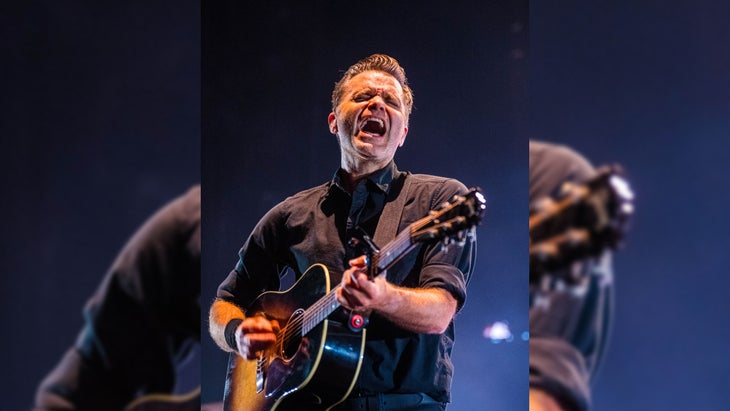
I don’t know who first said this, but I heard my friend Britt Daniel from Spoon once say, “inspiration likes to find you hard at work.” I spent a month or two writing for our [2005] record Plans. I had been writing without getting anything that I was really proud of or that I felt was up to snuff for the record. [And I was] starting to get really discouraged and having all of those dire thoughts that creative people have, like, “Maybe I’m done.” The next day, I just walked into my studio and wrote, “I Will Follow You into the Dark” in like 15 minutes. And I say that not as a flex to be like, “look at how great I am, that I wrote this song that is our most popular song so quickly.” No. It took months of failure to get to that 15 minutes.
And that’s a principle that I’ve certainly followed as a creative person, but also something that I’ve really leaned into as an athlete. When I finished my first 100-miler ten years ago, I had a friend write a blog post about it, and I took mild offense at how she chose to start it, which was “Ben is my friend for whom everything is easy.” I was like, “No, this is not easy for me. I’ve just put the time into it.” And when you put time into something, when you spend so many hours honing a craft, the hope is that you will make it look easy.
Is there anyone from your world that you’ve looked up to as a role model, combining music and athletics, like you do?
As a Gen Xer, we were kind of taught erroneously that we had to keep certain things separate and that you had to choose an identity and be [only] that. You had to be a jock or a punk or a metalhead, or a nerd, or whatever. You weren’t allowed to cross-pollinate. I think one of the places in which it seemed that was drummed into my head—and I’m not even sure how or why—was that being an athlete and being an artist were not two tastes that went great together. Off the top of my head, there wasn’t another musician or artist, other than Haruki Murakami, who really opened me up to that. And so I’ve been kind of just charting my own course.
What’s your training regimen like? Do you have daily or weekly mileage goals?
I’ve been working with my running coach [Gary Robbins] for some years, who’s a longtime friend of mine and really accomplished. Years ago, when we started working together, he took me off of miles and put me on time. There’s a school of thought, which I have come to be a firm proponent of, which is that your body doesn’t register miles. It registers time. My training—and my writing, too, for that matter—has really been based on trusting the process.
There are moments I think, “I really should run more this week. I really feel like it would be helpful to me if I did another ten miles this week,” like that’s going to push me over the edge. That’s going to give me the confidence. That’s going to make me feel like I’m building properly into this event that I want to do. [But] if Gary says, “Run three hours,” I run for three hours. I’ve experienced the results of that meticulous training. And that’s a similar process I take in writing.
Do you or your running coach track your physical data to plan your training?
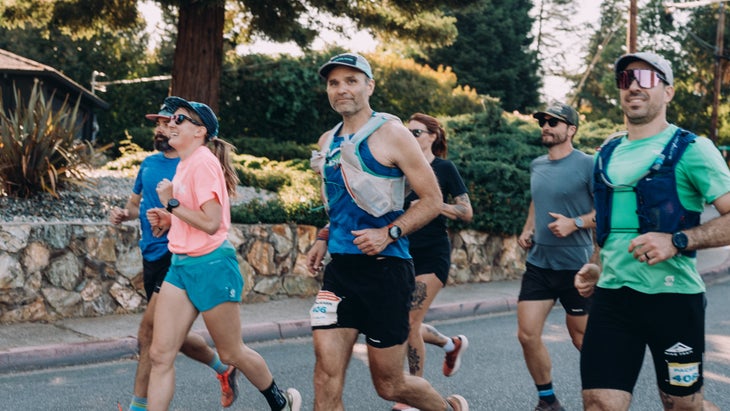
Not to my knowledge. I don’t have any heart rate monitoring or anything like that. And to be honest, I’m slow as fuck. One of the things I love about ultra is that I just go out, and the course dictates how fast I’m going to go. If it’s a really mountainous course [with] a lot of climbing, or if it’s at altitude, or if it’s hot that day, I’m running to finish. I’m running for the experience.
I have some running goals as I get into my fifties. I would like to get at least one more sub-24 100-miler. I’ve only done it once. I’d like to do it again. I think it’s possible. I know it’s possible. One of the things I love about ultrarunning is I very rarely run the same race twice, so I don’t have anything to compare it to, and therefore, I can’t be disappointed if I don’t do it as fast as I thought I could.
How do you find the time for your running and your music?
I think what’s of paramount importance is to mention I live a very charmed life. I do not have the stressors that most people have in their lives. And I think that’s really important for me to acknowledge. I don’t commute to a job every day and sit in a chair for eight hours. I love children, but I don’t have them. I don’t have the economic insecurities that a lot of people have. So I think whenever we talk about this kind of stuff, like, how can this person take such great care of themselves? There’s a reason they can take such great care of themselves.
Last year, as a fundraiser for Protect Our Winters, you let people donate money and pick songs for your New York City Marathon playlist. Do you always run to music?
I tend to do podcasts on long runs if I’m by myself, or audiobooks. And usually that’s some political stuff, you know, or baseball stuff. I usually try to start just rawdogging it when I’m by myself up in the mountains, just to kind of be present. But there’s inevitably a point in a training cycle [when] I’ve just really got to listen to something. Nature being amazing just isn’t doing it for me anymore, and then I listen to music.
I do listen to music during races sometimes, but only as a treat. For example, at Western States last year, I rawdogged the whole thing until mile 50 or something like that. After I left Devil’s Thumb [a 1,600-foot climb at mile 47], I was basically having an electrolyte or heatstroke kind of thing. I put in some music on the way back down to the river. I needed something to make me stop thinking about how bad I felt. And that just gave me this incredible boost.
As you approach your fifties, what have you noticed about your body? Are there things you’ve learned or ways you might treat yourself differently now than when you started ultras?
You know, I’m very superstitious about talking about my health as a runner because whenever I say something optimistic, something bad happens. As soon as I express gratitude about something like that, the universe just has a way of teaching me a lesson. So, I’m not going to comment on that right now because I’m going to a race in like three days.
This interview has been lightly edited and condensed. It is from the Summer 2026 issue of Outside magazine. To receive the print magazine, become an Outside+ member here.
The post How Death Cab for Cutie’s Ben Gibbard Uses Creative Discipline to Fuel Long Runs appeared first on Outside Online.
Source: Outside Online — Read original