
Su Yiming Is Ready to Step Out of His Comfort Zone
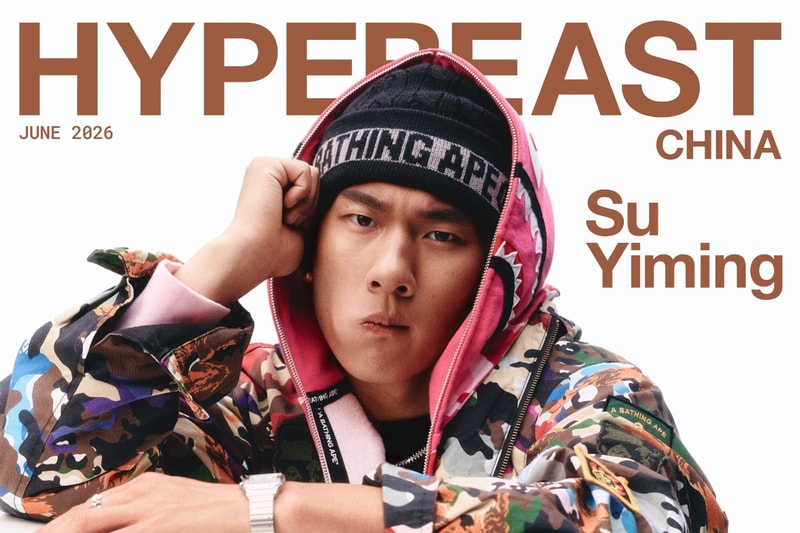
At just 22 years old, Su Yiming has already spent four years carrying the title of "Olympic Champion." His trajectory as a professional snowboarder and his journey to the highest podium in the world have been thoroughly dissected by countle…
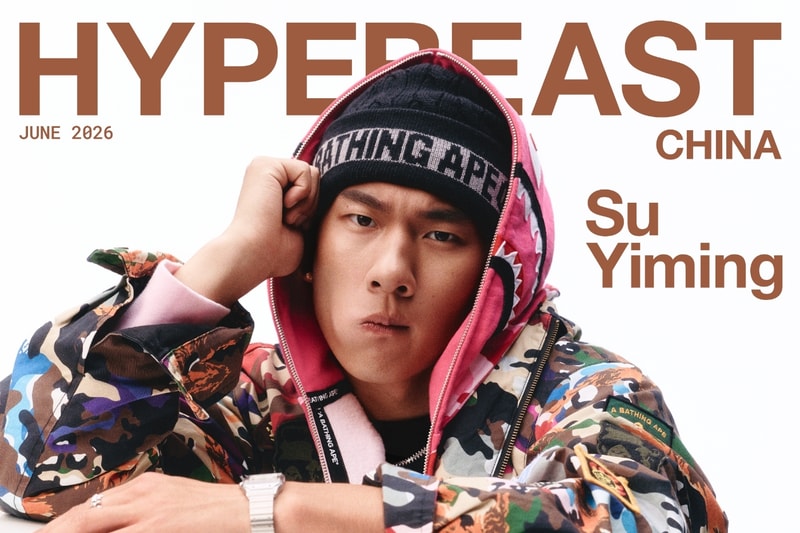
At just 22 years old, Su Yiming has already spent four years carrying the title of "Olympic Champion." His trajectory as a professional snowboarder and his journey to the highest podium in the world have been thoroughly dissected by countless media outlets. Every peak, valley, breakthrough, and transition in his athletic career has been replayed and scrutinized like a slow-motion contest highlight.
Following his triumph in Milan this past February, where he once again captured global headlines, repeating the same narrative of his slope-side legend felt like an exercise in redundancy. We realized that simply retreading a familiar "growth history of a champion" failed to answer a far more compelling question: Away from the snow, who is Su Yiming actually becoming? Rarely do people realize that, beyond his status as an elite athlete, Su Yiming has always been a creator. For this feature, we shift our focus to a newly unveiled chapter of his life — his debut as a streetwear brand founder. Looking through Hypebeast’s signature lens, we sit down to reintroduce the world to the man behind the medals.
Growing up as a child actor in film and television gave him an innate comfort in front of the camera and an early fashion sensibility. Throughout his athletic career, he has systematically collaborated with top-tier global brands. Beyond standard endorsements, he has actively designed snowboard outerwear for adidas and continuously co-created collaborative boards with Burton, the foundational pioneer of snowboarding.
Now, rather than being a mere synonym for a champion or a brand collaborator, Su Yiming wants to physically construct a personal symbol rooted in street culture. Gracing the latest digital cover of Hypebeast China under the theme "Made by Ming," he maps his evolution from the builder to the creator and ultimately to "the icon," pulling back the curtain on his highly anticipated personal brand: Süugar.

In Conversation With Su Yiming
Hypebeast: Looking back at your journey from a child actor to a professional athlete, at what stage did you first develop an active interest in streetwear and fashion?
Su Yiming: Probably around 15 or 16. That was when I started developing a real awareness of personal style and fashion. I began forming independent opinions and finding directions I genuinely liked. Along the way, I constantly exposed myself to new things and experimented to find what suited me. Transitioning from acting to professional sports meant experiencing a lot of different environments, which gave me a wealth of inspiration. The longer I walk this path, the more I realize that finding a unique, unrepeatable style is what works best for me.
Who are the designers or brands that have influenced you the most? What kind of inspiration did they bring you?
Pharrell Williams has had a profound impact on me. I’ve always followed his work, and his early skate-influenced street style left a lasting impression. I grew up immersed in the culture of snowboarding, skateboarding, and surfing, so his design philosophy really resonates with me. If I ever have the honor of collaborating with him, I’d love to merge it with my sport and create something truly exciting together.

Your collaborations with adidas and Burton allowed you to participate deeply in the design process from scratch. Did those experiences spark the joy of physically building things? What was your biggest takeaway?
It was an incredibly enjoyable and magical process because every single product we designed was something I was going to wear and use myself. Competing on the world stage while wearing apparel I helped design gives me an extra boost of energy. Before this, I didn’t have the bandwidth to participate in the entire end-to-end design cycle, so it was a massive learning process, observing professional designers and the people around me. We started with a blank sheet of paper and, through mutual effort, delivered a finished product. Standing on the course wearing clothes we co-created, allowing people to see my personality and style — that feeling is unmatched.
“I don't like doing things I'm not genuinely interested in, or things driven purely by utility. I want everything I do to come straight from the heart.”
Beyond snowboarding, you also enjoy billiards and golf. Do the skills and experience you’ve accumulated over the years on the slopes translate into other sports, or even into building your personal brand?
To me, no matter what you are doing, the underlying logic is exactly the same. First, you have to find what you love — that is the most important thing. I don't like doing things I'm not genuinely interested in, or things driven purely by utility. I want everything I do to come straight from the heart. Secondly, snowboarding taught me patience. You have to accumulate experience over time and move forward with your feet firmly on the ground. Sometimes success doesn’t arrive immediately, but you still have to stay humble, hopeful, and positive.

You mentioned the importance of time. A run on a big air ramp is often over in a flash - dropping in, spinning and landing takes seconds - yet it requires immense preparation. How do you view that relationship with time?
It’s completely true. In Big Air, a single run from drop-in to landing takes about 10 seconds, and only about three of those seconds are spent in the air. For example, when we practice spins, moving from a 1,800 (five rotations) to a 1,980 (five and a half rotations) is only an extra 180 degrees. But that extra half-turn often requires an entire summer or more than half a year of physical conditioning and simulation training. I only dare to try it on real snow once I've achieved total consistency. Extreme sports come with high risks, so safety is paramount.
When it comes to time, the Milan Winter Olympics really struck a chord with me. After my final run in the Big Air finals, I landed the trick, but I knew it wasn't my best execution — the landing had visible flaws. I knew right then that gold was out of reach. But in that exact moment while waiting for the scores, the biggest thought in my head was: "Wow, these four years went by so fast." All my effort over the past four years came down to this one jump, this one contest. Even though I walked away with the bronze, I was still incredibly happy. It was a proper conclusion for myself. That bizarre sensation of four years ending in an instant is something I will never forget.

“The brand is called 'Süugar.' On one hand, it plays on my name. On the other hand, I want everyone to live their lives with positivity, joy, and plenty of 'sweetness'.”
This interview marks the official public debut of your personal brand. Can you introduce it to our global audience — the name, logo and positioning?
This is the first time I am publicly announcing this idea. The brand is called Süugar. Because my surname is Su (Sü), I intentionally capitalized the "S" and added extra "u"s. The name plays on my identity, but more importantly, I want everyone to live their lives with positivity, joy and plenty of "sweetness" every single day. The logo will retain the "butterfly" element. From the very first design project I ever touched, the butterfly has remained the symbol that best represents me.
In terms of positioning and products, I’m starting within my comfort zone: snowboarding. I want to give people the opportunity to experience the professional boots, boards, bindings, and outerwear that I actually use during training and competition. Down the line, I will gradually introduce my broader perspective on streetwear and lifestyle apparel.

Why are you drawn so strongly to the butterfly motif?
The butterfly doesn’t just mimic the shape of my silhouette when I'm mid-air; it represents my deep yearning for freedom. Wearing the butterfly pattern during training and competition feels like a source of extra energy and inspiration. It makes my movements feel more expressive and extended, showing a side of me that stands apart from everyone else.
It isn’t rare for elite athletes to transition into other industries, but truly founding an independent brand is uncommon. Was there a specific catalyst for this decision, or was it a natural evolution?
It was a gradual process. Working closely with brands like Burton and adidas got me deep into the technical design side, and I realized I had a genuine passion for this space. I thought to myself: If I love this so much, why not start my own brand where I can dedicate more time, energy, and fully articulate my own vision? It just evolved naturally from there.

As a young creator who has worked closely with global powerhouses, does founding your own brand signify taking absolute creative control?
Yes, it gives me a much larger canvas to inject my own ideas. Since I was a kid, I’ve always told myself to "never set limits." Snowboarding brings me a pure sense of freedom, so I hope the brand won't be confined to a single product category. Instead, I want it to showcase a wide variety of things through diverse design.
Do you worry it will be perceived merely as "Su Yiming merchandise"?
My original inspiration was to give people a different medium through which to understand who I am. Every product we introduce contains my personal thoughts and attitudes. The snowboards, gear, and streetwear you see are items I use daily — things that, in my mind, are perfect for the current state of the sport and lifestyle. It isn't just traditional "merch." I want people to feel the joy I experience on the slopes through a tangible, physical object. As for the apparel, you can completely look at it as an extension of my personal wardrobe, reflecting my lifestyle when the cameras are off.

As a professional athlete, your targets are mathematically absolute. But in business and fashion, the horizon is endless. What does "winning a championship" look like for Süugar?
Sports and fashion are vastly different. In sports, the objective is linear: land a trick, win a medal, and the goal is achieved. In commerce and streetwear, I am a complete novice with so much left to explore and learn. To draw an analogy to snowboarding, my ultimate goal repeats every four years with the Olympics, but the moment one cycle ends, a new one begins with the World Championships or the next Games. The same applies to fashion. I want to continuously build my brand well, inspire more people, and let them feel the joy behind what we do. That is my definition of winning.

You grew up in an era where the younger generation in China is entirely redefining what is "cool." It’s no longer about translating Western frameworks; you are building your own syntax. What role do you want your brand to play in this wave?
I think the youth of this era simply want to express their unique, individual identities—to "never set limits." There isn't one correct answer; it requires exploring with your own emotions and understanding. As long as you love what you are doing right now and enjoy the process of progression, that’s beautiful. I hope my brand communicates this yearning for freedom and absolute focus on passion.
Operating a brand introduces a brand-new arena, meaning you take on the risk where "if the brand fails, Su Yiming fails." Are you ready to carry that weight of collective expectation?
I am absolutely going to give it everything I have to make it a success. But at the same time, I balance multiple identities: I want to push further as a professional athlete and secure more titles, and I am also concurrently a university student. Time management is a massive challenge. Because this brand comes from a place of genuine passion, I will invest maximum effort. But since I am a newcomer lacking traditional business experience, I will remain humble, learn from my seniors, and improve step-by-step along the way.

In the public eye, the name "Su Yiming" has surpassed the individual athlete to become a cultural symbol for the youth generation. How do you internalize being an "Icon"? Does it bring pressure or a sense of responsibility?
That feeling became much stronger after I turned 18. My first Olympic experience felt like a kid chasing a dream without any real pressure because everything was fresh and I was just there to enjoy it. But when I stood on the Olympic stage a second time, I felt the weight of responsibility. I realized I was no longer participating purely for personal hobby; I represent a part of Chinese snowboarding, and I need to showcase the spirit and strength of Chinese youth on the world stage.
Snowboarding has a relatively short history in China, and I want to prove to the world that through our collective efforts, we can catch up and excel in this era. I turn that responsibility into fuel. I love converting pressure into momentum and enjoying the ride. To me, being an "Icon" simply means doing what you are supposed to do well. The things you experience while chasing your dreams are the only true, unrepeatable riches in life.
If your athletic career eventually comes to an end in the future, will you commit entirely to this brand, or will you look to create something entirely new?
This brand will always walk alongside me, and I am entirely willing to dedicate my time and energy to its growth. At the same time, I believe life shouldn't have boundaries. I’m the type of person who loves taking wild, untethered ideas and turning them into reality. What new thoughts a 25-year-old or a retired version of myself might have remains unknown—but I am looking forward to it with immense anticipation.
“No matter the field, no matter the path, I want to strike like a clap of thunder.”
"Ming" (鸣) is your name, but it also translates to making a sound or a declaration — something you’ve done consistently. If you had to define it today, what kind of "voice" do you want to project through this brand?
Just like my name implies, no matter the field, no matter the path, I want to strike like a clap of thunder (Yiming Jingren / 一鸣惊人). That is the conviction I hold for myself, and the ultimate goal I am striving toward.

Photographer: Zhongjia Sun
Director: Daniel Teo
Videographer: Gavin Li
Stylist: Feihong
Hair & Makeup: Siyuan
Producer: Parris
Editor-In-Chief: Phil Gong
Associate Managing Editor: Buzz Lee
Creative Media Associate Director: H
Global Creative Director: Kevin E. Wong
Media Partnerships Manager: Zachary Lai
Graphic Design: Shin Tian, Forrest Grenfell
Gaffer: Xuanchao
Styling Assistant: Paprika
Retoucher/Post-Production: Avery
Production Coordination: Yee
Special Thanks to A BATHING APE®/BYREDO/CARHARTT WIP/LOUIS VUITTON/USM
Click here to view full gallery at Hypebeast
Source: Hypebeast — Read original