
The Reality of Spending 42 Days in Isolation After Being Aboard the Deadly Hantavirus Cruise
Jake Rosmarin is a New York-based travel influencer who is in federally mandated quarantine after being aboard the MV Hondius, a 353-foot ship built for polar expeditions to the Arctic. On May 2, 20 26, s o m e passengers experienced severe…
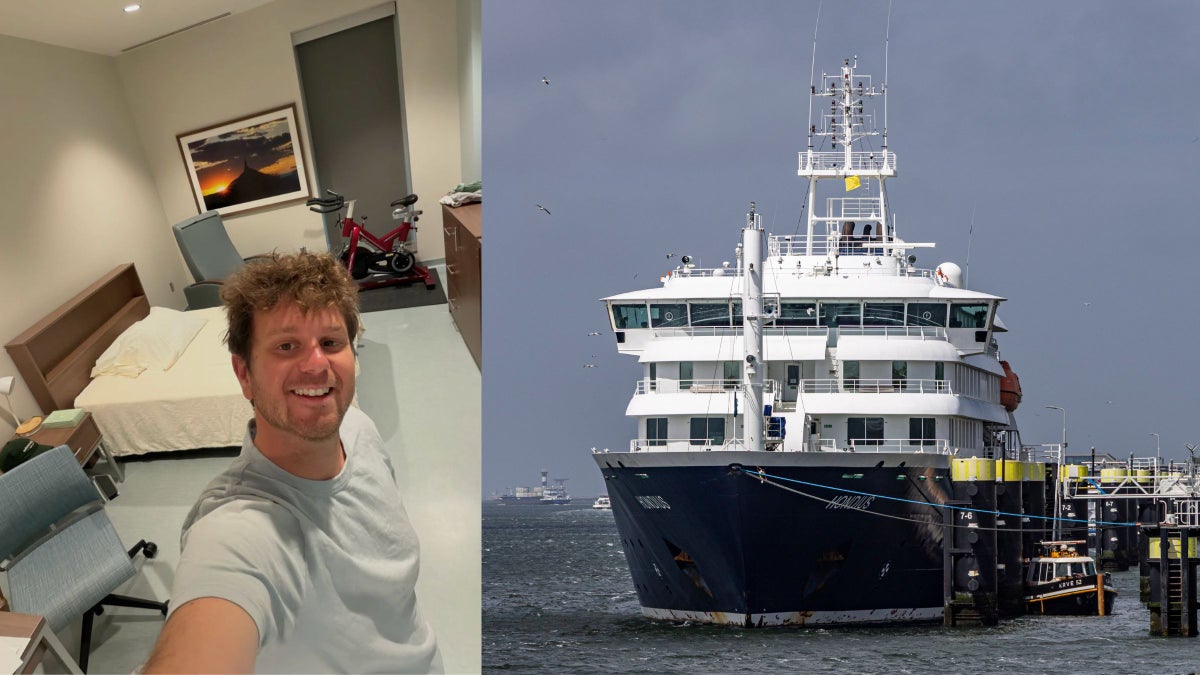
Jake Rosmarin is a New York-based travel influencer who is in federally mandated quarantine after being aboard the MV Hondius, a 353-foot ship built for polar expeditions to the Arctic. On May 2, 2026, some passengers experienced severe respiratory issues, and three deaths in total have been reported as of May 13. It was confirmed that the Andes hantavirus was responsible. To date, some passengers in the U.S. have been released to continue quarantining at home, but Rosmarin and a dozen other Americans are staying at a facility in Nebraska. Rosmarin spoke with Outside about how he’s navigating life indoors, plus what he’s doing to stay connected with nature while stuck within four walls. This is his story as told to health journalist Korin Miller.
The captain’s sullen face belied his matter-of-fact tone. I couldn’t believe what I was hearing. He told us that a passenger aboard the ship died. I, along with the other 146 passengers aboard the MV Hondius were tightly packed inside the lounge on deck five of the ship when the captain delivered the news. It was less than two weeks into our month-long expedition across the South Atlantic Ocean. The journey included stops in Argentina and Cape Verde, a group of islands off the west coast of Africa, as well as several islands, including the active volcanic Nightingale Island, which is remote and uninhabited.
Someone just died? I thought. That news was unpleasant to hear. But I wasn’t afraid yet, as the death was originally believed to be due to natural causes. A few days later, we learned that another person had passed. Wait, another person is dead? I thought to myself. That was concerning. Not long after, I found out a third person was in critical condition. As a travel influencer, I’m used to being away from home for long periods. But I suddenly felt very lonely—and worried.
No One Knew If or When Help Was Coming
I travel for a living and have been a full-time travel influencer for three years. I’ve been to Antarctica, Iceland, and Zimbabwe, among many other places. I’ve also visited all seven Wonders of the World. Those experiences were fun, exhilarating, and sometimes a little nerve-racking. But I’ve never felt fear, real fear, until things went south on the MV Hondius.
Things got really scary when we learned that the cause of these sudden deaths and serious illnesses could be due to the Andes hantavirus. The Andes hantavirus has origins in South America and is typically spread by rodents. It’s also the only form of the deadly hantavirus that’s transmitted between humans and has a mortality rate of up to 50 percent, making it deadlier than COVID-19. It can remain in an infected person and cause symptoms such as nausea, fever, chills, and muscle aches for up to 42 days. Needless to say, it’s horrifying—and it was on our ship.
While we weren’t ordered to be in complete confinement in our rooms at this point, I mostly stayed in mine. I would leave for ten to 15 minutes a day to quickly grab breakfast, where I’d get enough food for lunch as well. I’d also try to snatch a breath of fresh air.
As soon as I got back to my room, I would take off my clothes and shower. This ritual, I presume, is a bit of a trauma response to the COVID-19 pandemic. Two days after we found out that the Andes hantavirus was definitely behind the deaths, the ship’s crew officially recommended that we remain in our rooms. (I think it was two days later. To be honest, my brain is fuzzy on the timeline, as this experience has been traumatizing.)
There were so many unknowns. We didn’t know when sick passengers would be able to leave the ship, and health officials in Cape Verde, our closest point of land, were not cooperating. It felt like no one would help us. Or maybe no one knew how to help us.
For American Passengers, Nebraska Was the Final Stop
We didn’t know until the night before leaving the ship that we would be allowed to get off at Tenerife, one of the islands that make up the Canaries, located off the northwest coast of Africa’s mainland. I saw in the media that Americans were headed to the state of Nebraska for quarantine—I had never been so excited to go to Nebraska. I felt relieved that there was a plan in place.
Things moved quickly from there. We were all given a bag that was only a bit bigger than a plastic shopping bag. My priority was getting my camera equipment off the boat because that was crucial for my job. I had to make tough packing decisions and left behind a lot of souvenirs I had bought, along with clothes. I stuffed everything I could into my backpack, including some toiletries and a few pairs of underwear. Before exiting the ship, I layered on two sweatshirts and pulled on a pair of pants.
We all had to wear plastic garb around our bodies, but it was optional to put on a head covering. I put mine on, along with a KN95 mask. I was mentally prepared for what would happen next because of what I’d seen with COVID-19. But even then, it was surreal.
People who interacted with us were in full hazmat gear, and some had gas masks on their faces. It felt like we were in a movie. We were brought straight off the ship and were able to leave the island without border control, which was a first for me. They just asked for our names and checked them off. We were then shuffled onto buses to head to the airport. On the plane bound for Nebraska, there was at least one seat between each passenger. Every member of the flight crew on board was covered from head to toe.
The Quarantine Period Is 42 Days
When we arrived in Nebraska, we were taken to the University of Nebraska Medical Center in Omaha. The medical personnel divvied us up into groups of five. Each group was accompanied by two doctors donning hazmat suits.
Originally, there were 18 Americans quarantining in Nebraska, each in our own rooms. (The other passengers on the ship are quarantining in their home countries.) Five of the American passengers have been allowed to enter home quarantine under the supervision of their local authorities.

Because the Andes hantavirus has such a long potential incubation period, we’re all cooped up here for 42 days. (We were told that Day One was the day we got off the ship.) Two people contested the quarantine, and we later learned that we’re required to stay here by the federal government. I was voluntarily staying regardless. I think it’s the right thing for my family, friends, and the general public. Plus, if something goes wrong, I have access to exceptional medical care.
I Haven’t Been Outside in Weeks. Here’s How I’m Maintaining My Sanity.
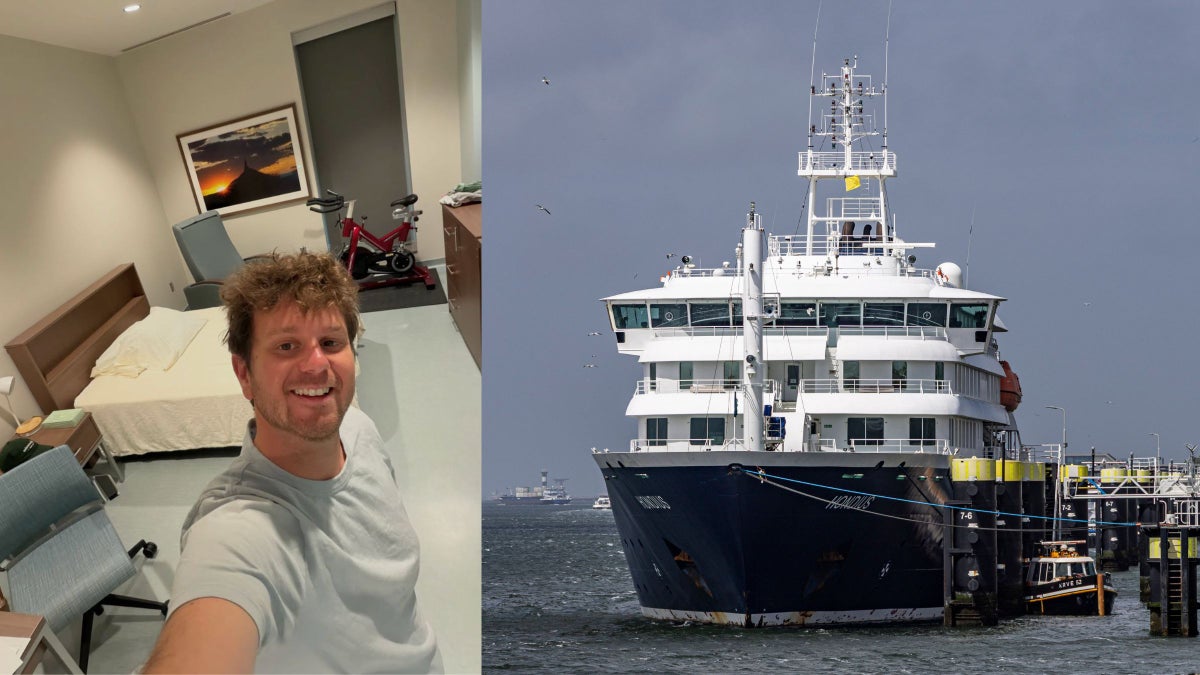
As of Friday, June 5, 2026, I’m 26 days into my quarantine. I’ve only left my room (which only has one window that doesn’t open) once, and that was to go to a shelter during a tornado warning. Other than that, I only have limited interactions with others while wearing a mask.
Someone will drop meals outside my door, and sometimes they’ll ask if I need anything. A phlebotomist, fully covered, of course, will occasionally come into my room to draw blood. After interacting with me, they discard the old gear and suit up again before heading to the next room.
I am constantly reminding myself that I went on the trip of a lifetime, and even the horrible way it ended doesn’t change that.
I haven’t had fresh air in what feels like forever, which is wild, as someone who usually spends a lot of time in nature. I started taking vitamin D the other day since I’m not getting any real sunlight. Alas, I’m just trying to do whatever I can to stay busy and positive. Fortunately, there’s exercise equipment in my room. My daily routine involves riding on a stationary bike and using the treadmill, cleaning my room, and working, which means sharing videos of my isolation, talking to brands, and posting content. The busier I keep myself, the faster these days fly by. I’ve been looking at a lot of photos from my trip and sharing photos and videos on Instagram of the unique animals and moments in nature I experienced on the expedition.
It sucks to not be able to go outside because I’ve always had a close relationship with the outdoors. I grew up on a lake, close to the Appalachian Trail, and hiked it a lot. I always liked stargazing, too. One of my friends sent me a projector that blasts the universe and stars on my ceiling to remind me of those days. Reflecting back on my time outside really keeps my mental health in decent enough shape. I keep photos from the trip up on my room walls to help me remember how amazing it was. I am constantly reminding myself that I went on the trip of a lifetime, and even the horrible way it ended doesn’t change that.
What’s Next for Me?
I was in a really dark place on that ship, and the support of my family and friends helped me through it. Changing my perspective and accepting the reality of the situation has gone a long way toward helping me get through this with a positive mindset.
Though I have 16 days left in quarantine, I have big plans for when I get out. I want to give my fiancé, family, and friends the biggest hugs. I’m so excited for those first hugs. I’m also planning to spend a lot of time outdoors. This experience has shown me how special nature is—and I can’t wait to enjoy it again.
Want more Outside health stories? Sign up for the Bodywork newsletter.
The post The Reality of Spending 42 Days in Isolation After Being Aboard the Deadly Hantavirus Cruise appeared first on Outside Online.
Source: Outside Online — Read original