
When the Water Is Low, a Packraft Will Go
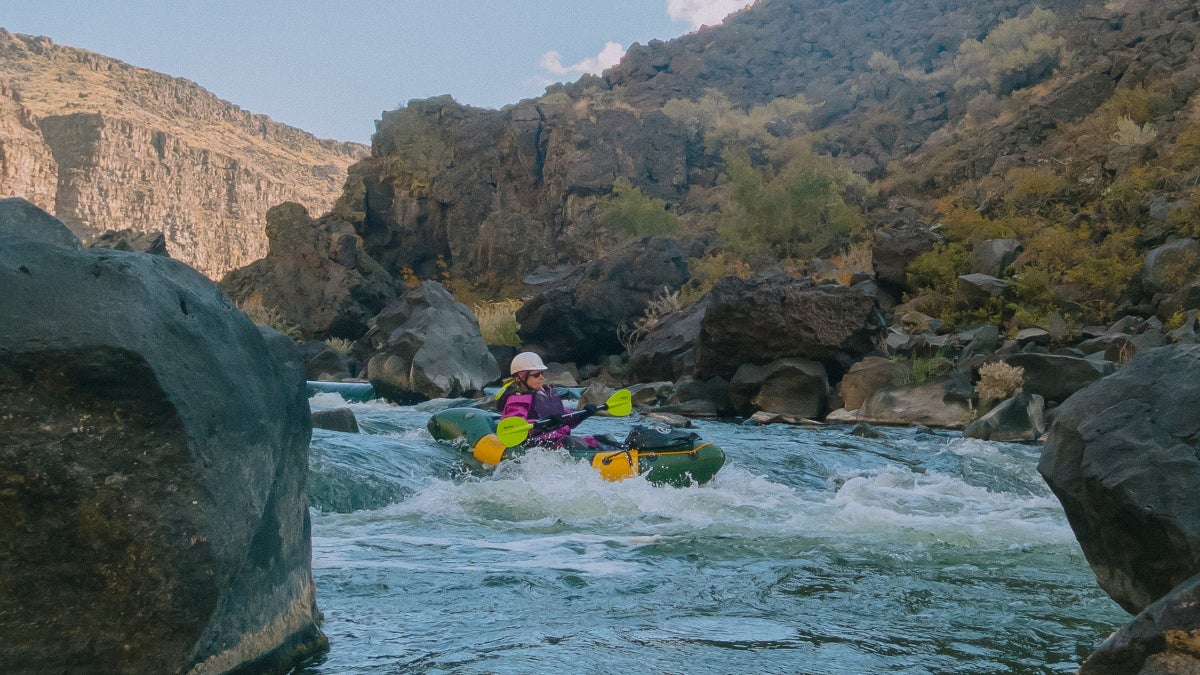
We’d been paddling the Owyhee River for four days, through the rugged basalt canyons and sprawling plains of eastern Oregon’s high desert. We’d drifted through stretches of water so wide and flat as to seem like the surface of a mirror, and…
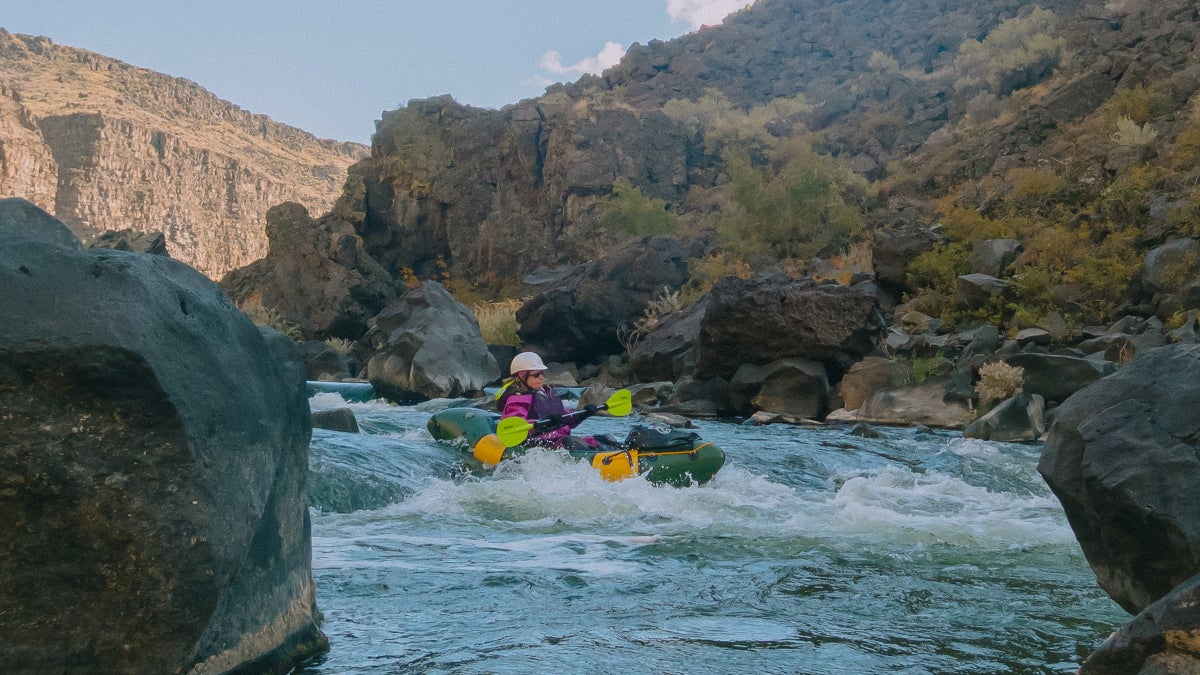
We’d been paddling the Owyhee River for four days, through the rugged basalt canyons and sprawling plains of eastern Oregon’s high desert. We’d drifted through stretches of water so wide and flat as to seem like the surface of a mirror, and navigated churning choke-points jammed with boulders.
It was early October, and the river was low. At times it felt more rock than water. Now, we were in the deepest part of the canyon. We’d only managed to get here on ultralight, one-person packrafts, and these rafts were the only way we’d get out again, three days later.
Dan Sizer, a river guide, and I stood in knee-deep water along the bank, peering over reeds and cheatgrass to scout the rapids ahead. With one hand, I steadied my sky-blue inflatable as it bobbed in the current. Around us, reddish basalt walls rose hundreds of feet into the sky. A handful of flickers, small, woodpecker-like birds, erupted from a copse of trees along the bank, crossing the water and becoming lost in the beams of late afternoon sun.
“What do you think?” Dan asked. “Which way should we go?”
It was a strange question. Dan was the guide. I was the client. I’ve paddled rapids just a few times in my life, and we were dozens of miles deep in the backcountry, where a popped raft would have high consequences. But Dan wore a genuine smile. He appeared to actually want to know what I thought. Was this a test?
Through the reeds, I could see a boulder the size of a parade float rising out of the river, the water flowing around it on either side. On the river’s left was a smaller pyramid of rock, with a jagged prow that looked like it could cut bone. Avoiding this thing felt important. The right side of the river was gentler, but the water here was shallow, barely a foot deep. It was a thinly-submerged cheese grater.
I stepped out of the water and balanced on a mossy rock with one foot to get a better view over the grass, pretending to evaluate the situation.
“I dunno,” I said, picking at a bug bite on my chin and attempting to look pensive. “Maybe that way?” I gestured vaguely in the general direction of the river.
“You’re right, I think the best route is to go left of that rock there,” Dan said, pointing, “then catch that eddy and go between those two rocks there. After that we’ll want to stay right, it looks a bit deeper over there. Good call?”
“Right, right,” I said, nodding. “That’s exactly what I was thinking.”
The post When the Water Is Low, a Packraft Will Go appeared first on Outside Online.
Source: Outside Online — Read original