
Wild Bison Return to the Outskirts of Chicago for the First Time in 200 Years
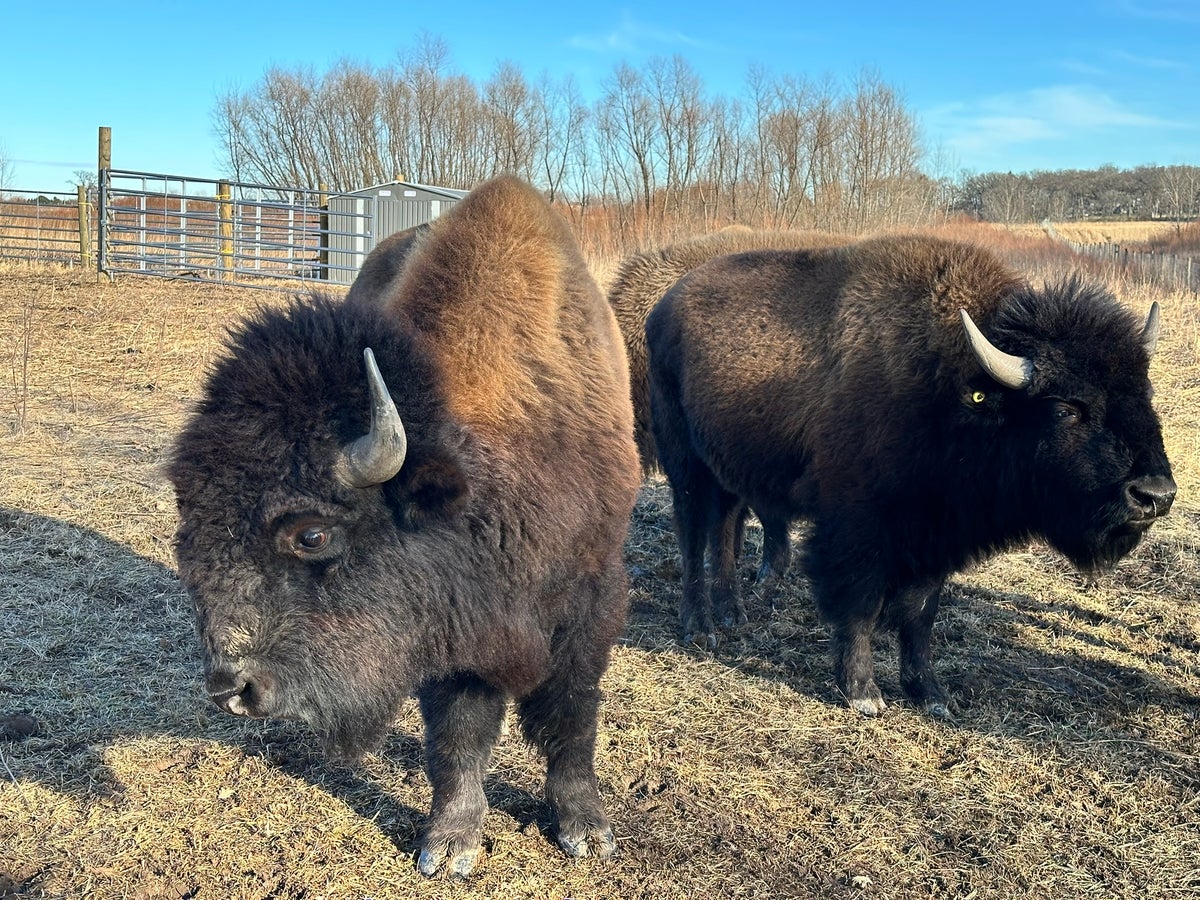
Tall grasses blow in the gentle breeze, and the sounds of hooves pat the prairie below. A few small snorts escape the bison’s noses, evaporating into the chilly air. The herd’s youngest member, hardly a month old, frolics in the grasslands.…
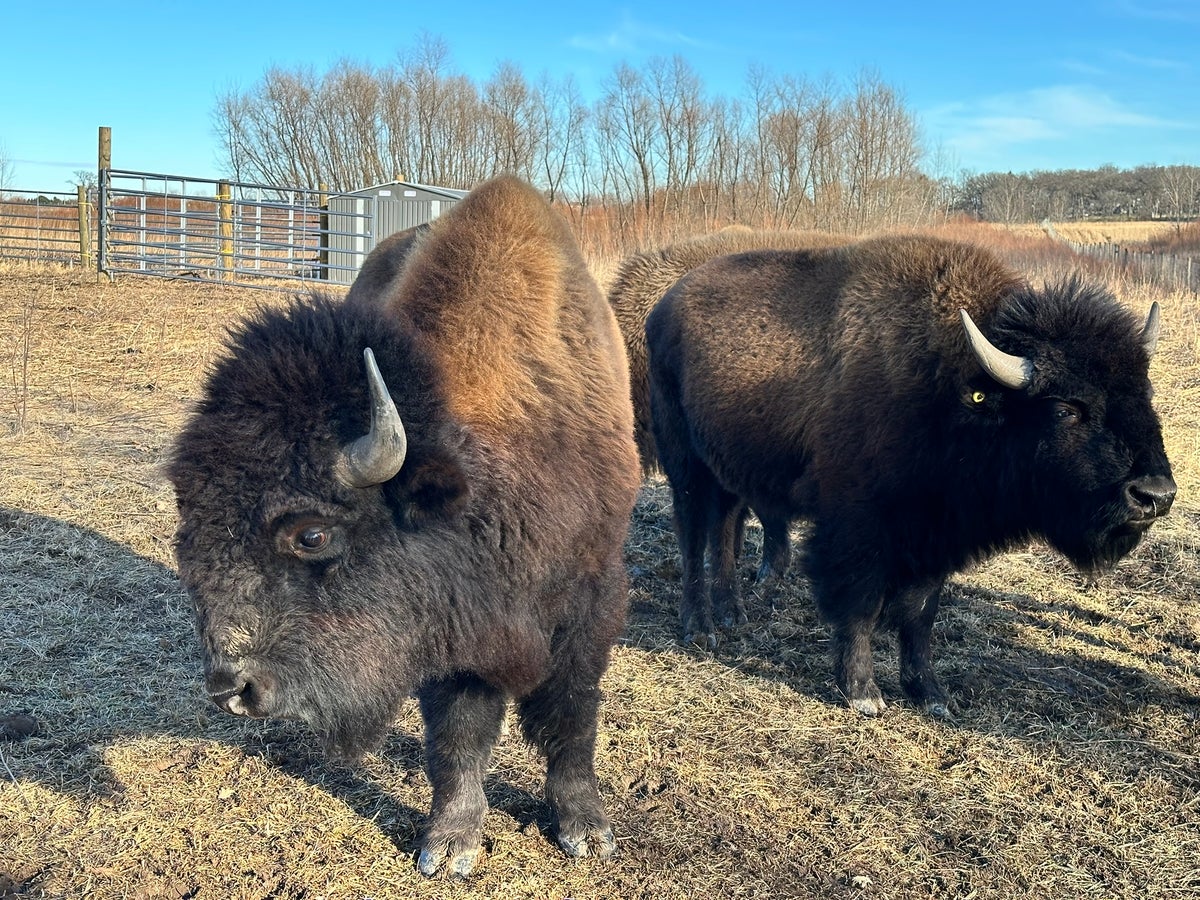
Tall grasses blow in the gentle breeze, and the sounds of hooves pat the prairie below. A few small snorts escape the bison’s noses, evaporating into the chilly air. The herd’s youngest member, hardly a month old, frolics in the grasslands.
This isn’t Yellowstone. Or the Badlands. This growing herd makes itself at home on Burlington Prairie, a forest preserve 60 miles northwest of Chicago. Absent from these Native lands for over 200 years, this little herd is bringing the prairie back to the Prairie State.
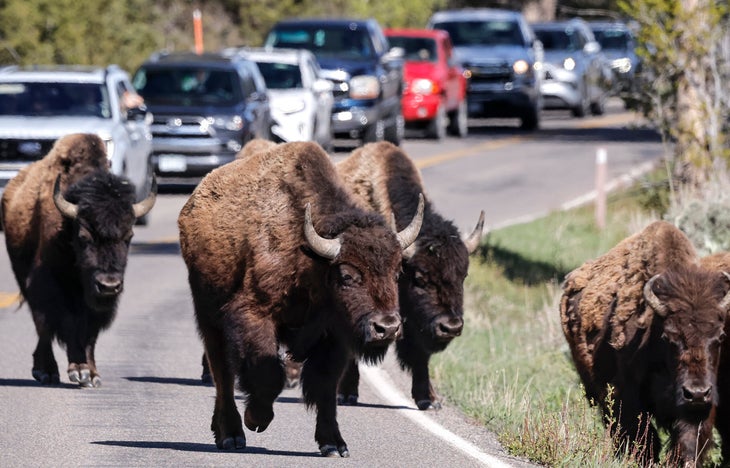
Nearly 4.7 million visitors flock to Yellowstone National Park each year to catch a glimpse of the resident bison herd, which fluctates between 3,000 and 6,000 individuals. The Burlington Prairie herd is comparatively small, at just seven members, but the chance to see bison in their native habitat, without mass crowds, makes this homecoming even more special.
An Ancestral Return
Six bison tentatively walked off a trailer onto the snowy Burlington prairie on Dec 5, 2025, into their new fenced enclosure. With 38 acres to roam, Forest Preserve District and American Indian Center of Chicago (AIC) representatives welcomed them to their new home.
“Most Indigenous people live far from reservation land,” said Jessica Pamonicutt (Menominee), president of the AIC, told Outside. “Having the bison on the prairie is a way for us to connect with that piece of our indigeneity that’s nearby. Urban Natives have a chance to understand this animal relative of ours and its significance in Indigenous history.”
The initiative started as purely ecological, spearheaded by the Forest Preserve District of Kane County’s Executive Director Benjamin Haberthur and District Natural Resource Management Director Patrick Chess. Ecstatic about bringing bison back to the prairies, they knew there was a bigger story to tell once they dug deeper into the restoration project.
“The story of the bison is the story of the Indigenous people,” Chess told Outside. The team set out to find an Indigenous partner, one that could bring the project to a deeper level. Things moved fast from there—AIC was the perfect partner because of its role within Indigenous communities and their connection to the land, and within months, the organizations began rolling out their plan to give bison a home on the prairie.
The project is a three-way partnership. The Forest Preserve District of Kane County owns the land, AIC stewards the bison, and Ruhter Bison, a local business with bison experience, manages the herd day-to-day.
Ghost Herd of the Great Plains
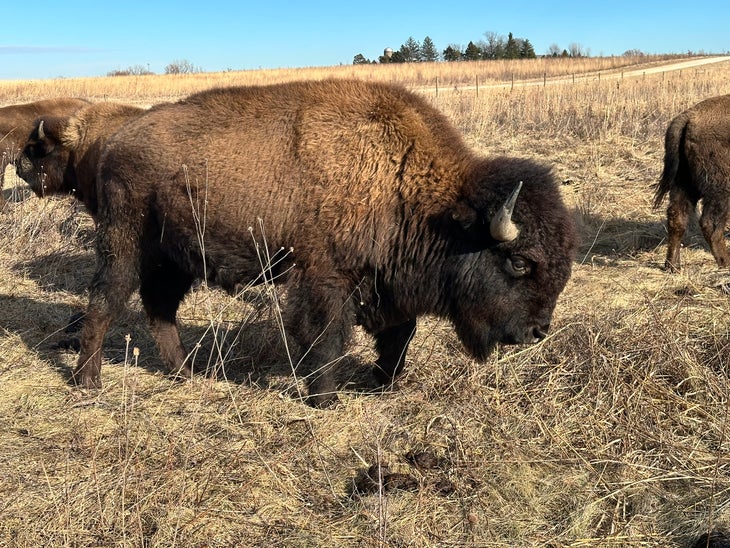
The decline of bison tells a history of westward expansion and European colonization. In the 1800s, 30-60 million bison roamed across the Great Plains, the vast expanse of flat grassland that stretches from the Rocky Mountains to the Mississippi River. As colonizers moved west, they slaughtered bison in mass numbers. Indigenous cultures had long lived in tandem with the bison, and their near-extinction meant Native nations also faced displacement and extinction of Indigenous foodways.
Bringing bison back to the Prairie State in a meaningful way is a powerful chapter in the Midwest’s history. These six bison come from an Illinois herd whose heritage traces back to the last remaining bison on the Great Plains.
“Our ultimate goal is to let the bison be bison. As a keystone species, they and the prairie go hand in hand—one doesn’t exist without the other,” Pamonicutt said.
Free to Roam
While there are two additional places to view bison in Kane County, Burlington Prairie Forest Preserve is unique because of its tallgrass prairie. The preserve in rural Burlington provided everything the team needed.
“We have bison on the prairie, rather than on a paddock,” Haberthur said. “It’s open to the public in a multi-purpose facility. The whole effort is publicly accessible.”
The project is a one one, considering the Forest Preserve is a public, tax-based entity. Public spaces mean public access, and as of May, anyone can visit the bison, and observe them from a respectful distance behind a fence.
Pamonicutt said the partnership with Kane County is represents a rekindling of people’s relationship to their land. “They have made sure our community is the priority when it comes to this herd, and respect our wishes in the way we want to do things with the bison.”
Wallows, Wildflowers, and Birdsong
Illinois, the Prairie State, as once almost entirely covered in prairie grasses. A drive through even the most rural parts of Illinois confirms that’s no longer the case, with less than one-tenth of one percent of prairie remaining.
The nature preserve is home to sedge meadow, wet prairie communities, mesic prairie, and cattail marsh, and over 215 native species. The Kane County Forest Preserve team surveyed the soil and ecological health of the area before reintroducing the bison. The team is waiting a full season to gather reliable scientific data on the project.
Anecdotally, the team is already noticing a positive impact. They’ve noted that grassland birds are using the shorter grazed grasses and are paying close attention to any new birdsong.
The bison’s ecological significance to the area is also huge. Their grazing helps maintain healthy grasslands and potentially increases native wildflowers. They also dig into the earth with their horns and roll around in the dirt, creating bison wallows. These small depressions hold water, creating microhabitats for insects and other wildlife, and in turn, attracting more birdlife.
Bison have an extremely positive effect on their ecosystems. Their dung is full of nutrients for the soil, fertilizing and attracting beneficial insects as they go. Selective grazing is another benefit—their patterns create mosaics in the landscape, allowing the prairie to grow and regenerate at different rates.
“We’re trying to do this with minimal intervention, but also want to make sure we learn about our herd, their habits, and observe how they change the prairie,” said Pamonicutt.
Visiting the Herd
Many in the community say they are ecstatic about their new neighbors, and the area is experiencing unprecedented visitor numbers, many from out of the area.
“We’ve noticed that for out-of-towners, seeing the bison seems really personal,” Michelle Blackburn, agricultural coordinator for the county, told Outside. “You’re visiting a beautiful vista, there are rolling hills and different landscape features that are so attractive when you visit these bison. It’s special.”
She also chuckled at the public’s reactions to the size of the bison. “They comment on how they must be a mini-herd. They’re not; they’re just young. They’ll grow.”
While the preserve currently has equestrian trails, plans are underway to expand the trail system, allowing a closer connection to the prairie.
A Baby Bison Was Born
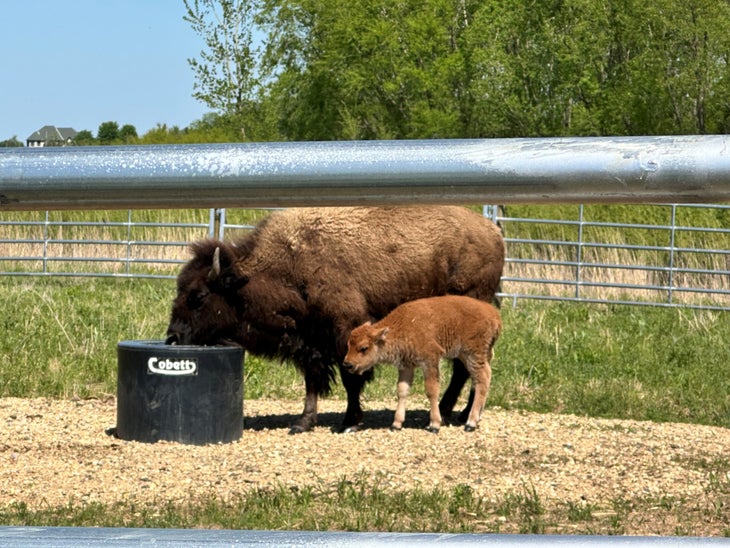
The herd’s already grown since its introduction six months ago. On May 9, a surprise graced the prairie: a baby bison was born. The team hopes for more calves in the coming seasons and plans to expand the herd by introducing more bison this fall.
Those involved with the project say they will expand the enclosure by 30 percent, reaching 90 acres altogether. Chess added, “The ideal end goal is 150 acres fenced for the bison, getting up to 25-30 in the coming phases.”
AIC is working on a community science program to teach the public about the bison and their relevance to Indigenous history. Pamonicutt says connecting Indigenous communities, especially younger generations, with the bison is key.
“You connect bison to being Native. No matter where you’re from, what tribe you’re from, you can identify by bison.”
For Pamonicutt, the true marker of the project’s future lies in its sustainability. “Restoration of the prairie is the ultimate success. We plan to increase the herd, diversify the DNA, build a community science program, and ideally acquire more land for them to roam.”
As the United States approaches its 250th anniversary, this project offers a framework for what the next 250 years could look like: collaboration, ecological healing, and Indigenous land stewardship. Out on Burlington Prairie, the young herd isn’t just grazing. Step by step, wallow by wallow, they are quite literally reshaping the future of the Prairie State.
How to Visit Burlington Prairie
Burlington Prairie sits in the northwest corner of Burlington Township, a small rural community about 60 miles northwest, or an hour’s drive, from the heart of Chicago. Parking is available on-site. Check the Forest Preserve’s website for track closures due to wet or snowy weather. There are three short trails in the reserve, but visitors can link the Wild Turkey Loop with the Horned Lark Loop for three miles of easy walking through tallgrass prairie.
Visitors keen to see more of Kane County can cycle or walk the Fox River Trail, a 32-mile track following the Fox River. Running from the Chicago suburb of Algonquin to North Aurora, the meandering path winds through towns and public parks. Cross-country skiing is possible in the winter, too.
Ashlyn Oswalt is a New Zealand-based writer who grew up near the Burlington Prairie. Her adventures are typically on foot or in a 4WD, and almost always result in a wildlife-centric hike. Her stories have appeared in Lonely Planet, NZ Herald, Stuff, and more.
The post Wild Bison Return to the Outskirts of Chicago for the First Time in 200 Years appeared first on Outside Online.